

Day 2
The second day of study visit in Greece showed how small-scale, community-based initiatives can reconnect city dwellers with nature, from urban beekeeping to a garden tended by elderly residents. It also highlighted the role of social enterprise in creating inclusion and work opportunities for people with disabilities. The day ended on an organic agroforestry farm, where participants learned how biodiversity and water management are tackled in practice.
Astiki Melissa
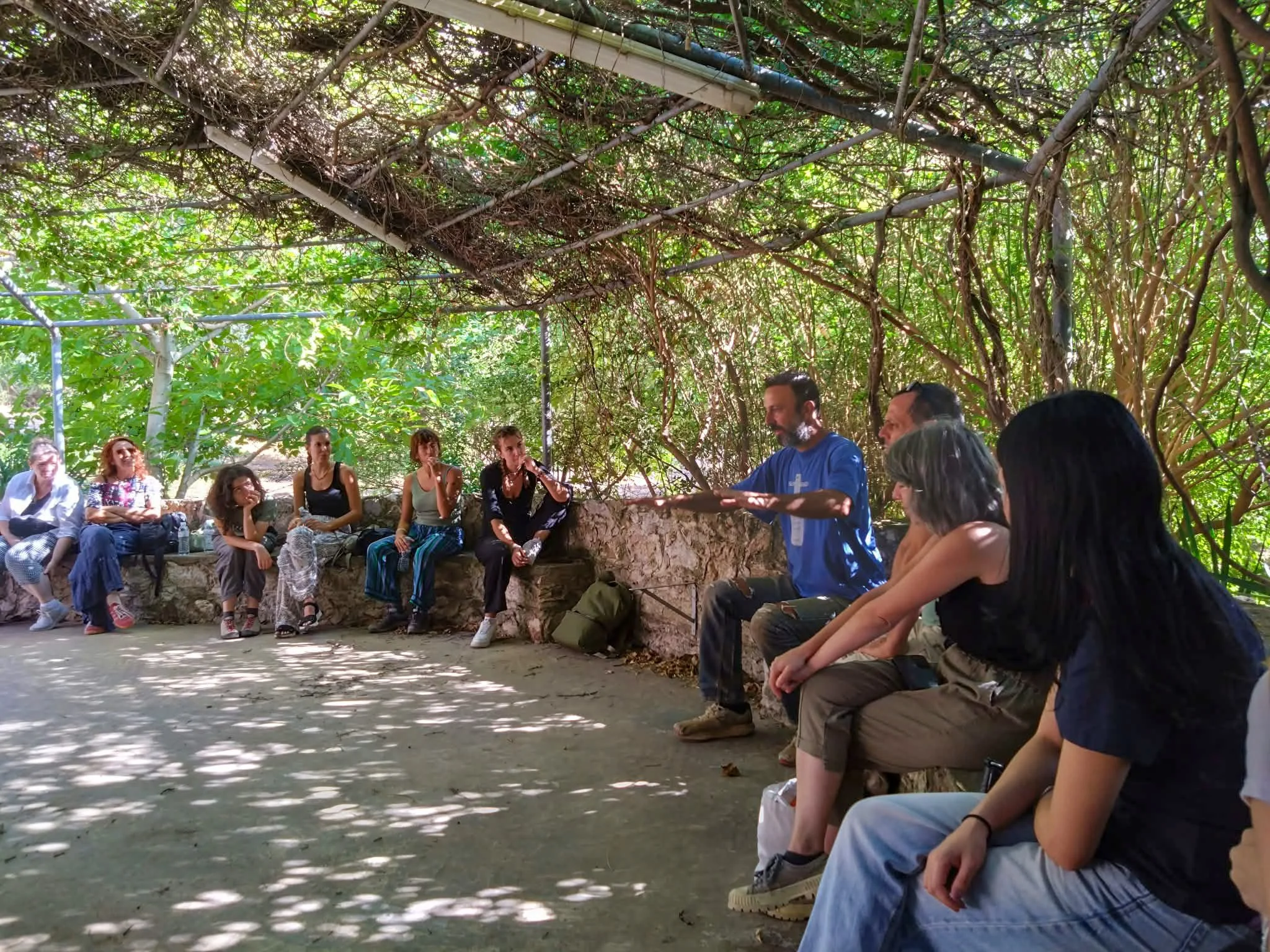
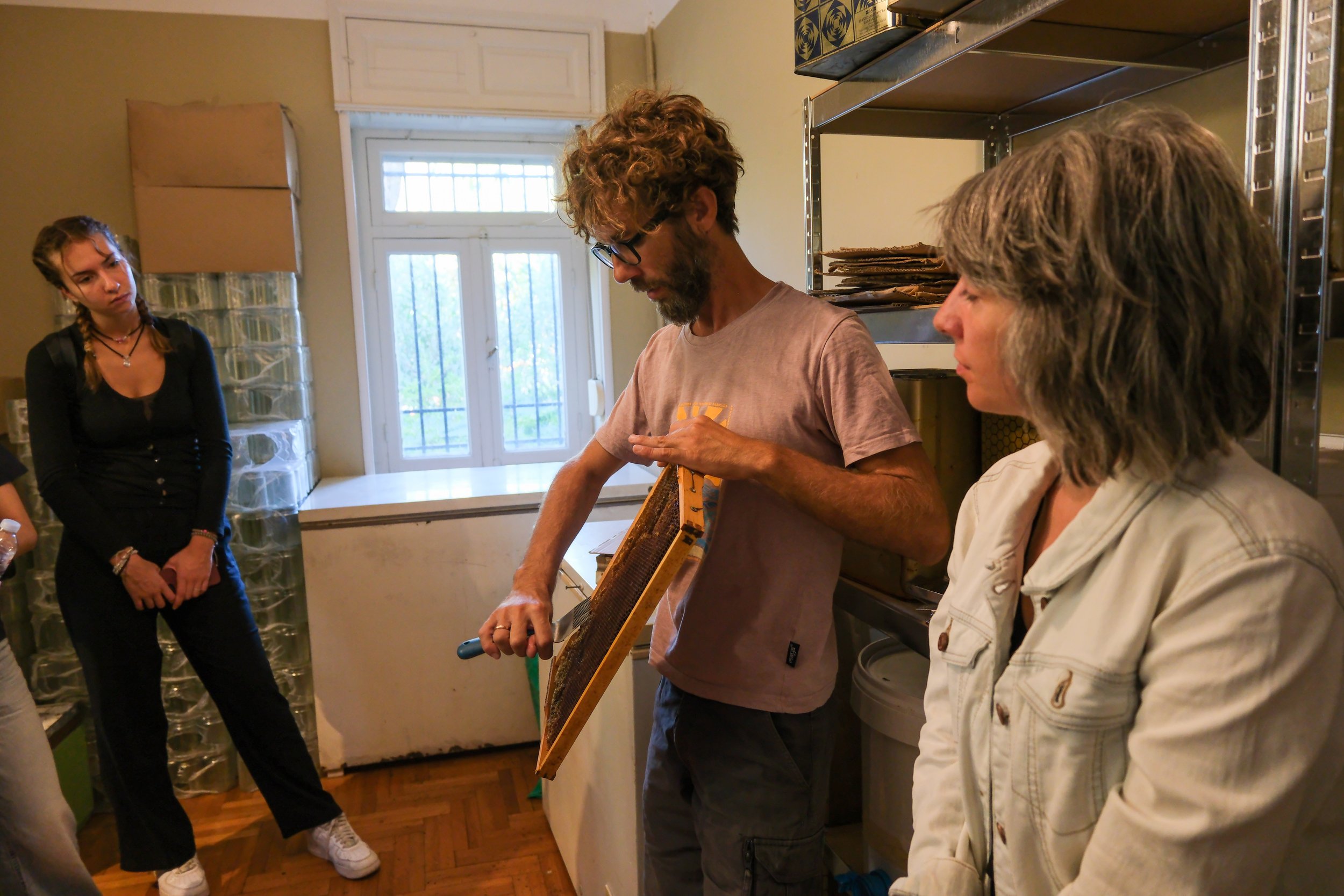
Astiki Melissa, which literally means "Urban Bee" was founded in Athens during the first lockdown. It aims to rebuild the relationship between city dwellers and nature through the world of bees and urban beekeeping.
We tasted their honeys, which come from hives located in urban settings, and listen to Nikos and Marili, who told us about the association's various activities and purposes:
Environmental education and training, through courses, experiential seminars and outreach activities;
Awareness-raising on urban biodiversity and pollination;
Involvement of volunteers and aspiring beekeepers, offering opportunities for hands-on participation;
Corporate social responsibility programmes and hive adoption initiatives.
Home for the Poor and Elderly
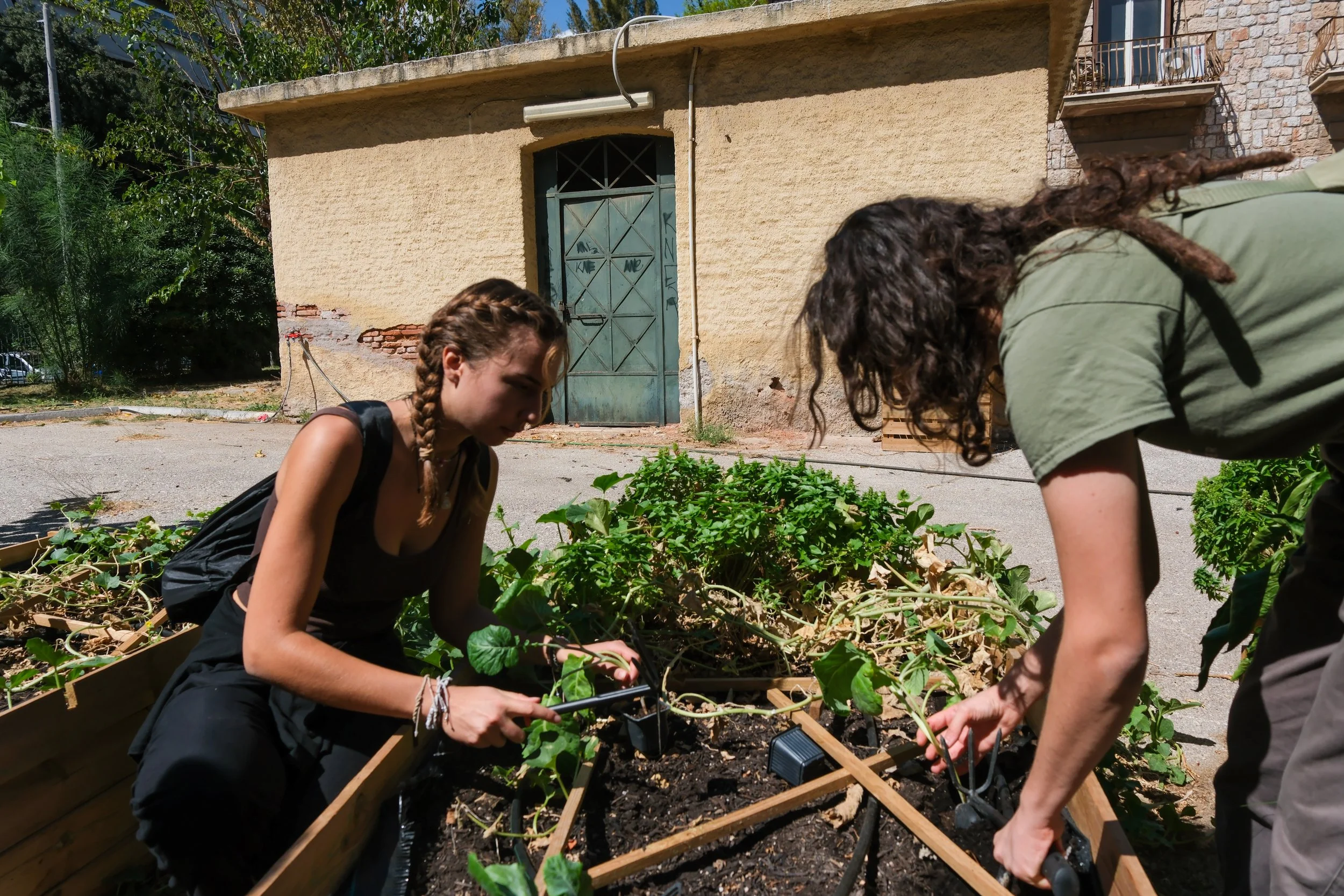
In late morning of the second day we arrived at the a community garden and vegetable plot inside the Athens Home for the Poor and Elderly. The small vegetable garden, built in square wooden raised beds is tended by the elderly and needy people who live in the home. It is a small space, but one that we imagine produces very satisfying results, judging by the size of the plants and the amount of fruit produced.
Myrtillo Cafe
Myrtillo Cafe is an inclusive social enterprise, which promotes the employment and active participation of people with disabilities. Through running a café and activities open to the public, it offers opportunities for training, skills development and social inclusion.
Mali Veni
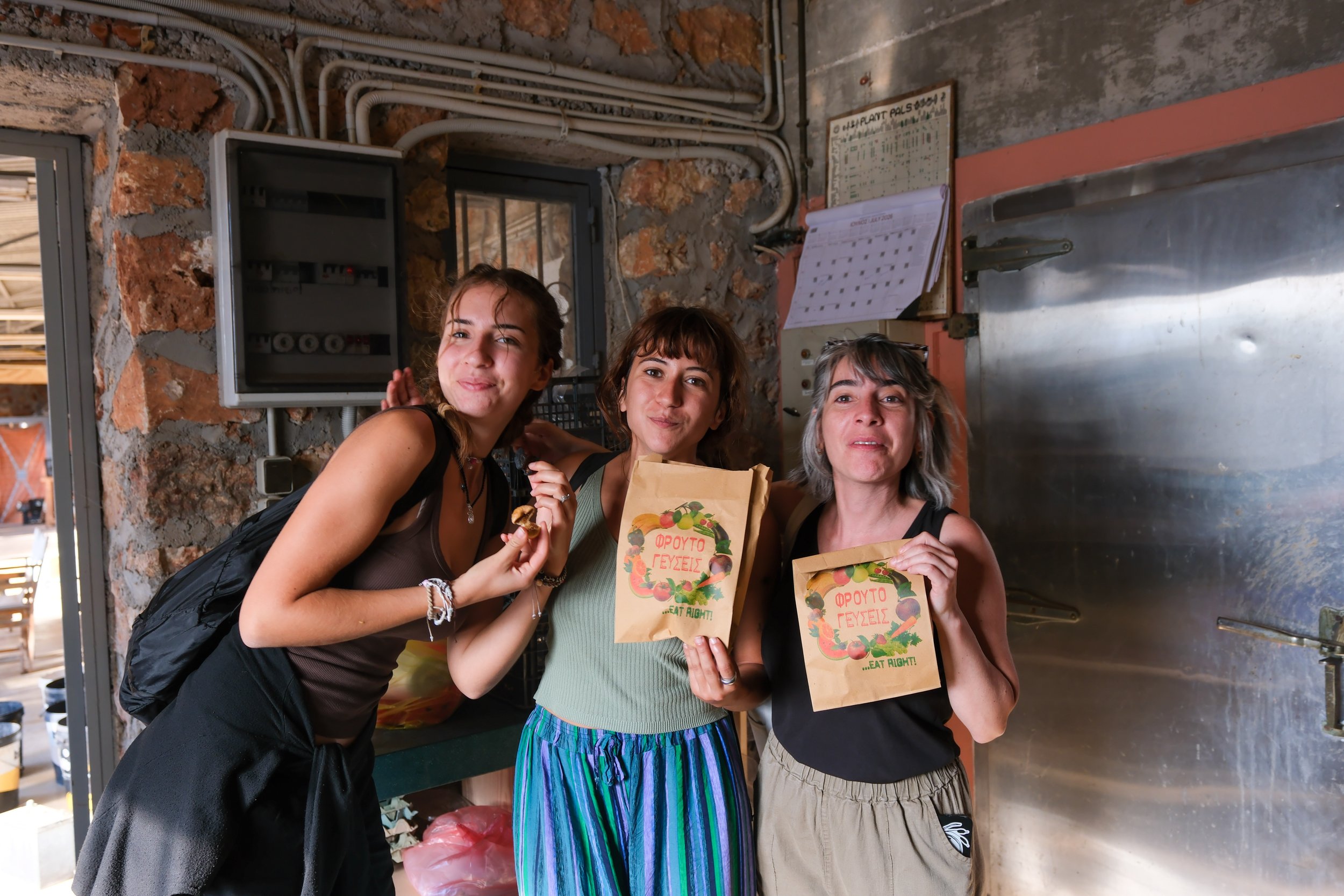
Mali Veni is a farm about 40 km south of Athens founded in 1984 and one of the first in Greece to adopt organic farming practices. Today the estate is an example of an agroforestry approach, integrating fruit trees, vegetables and various agricultural crops in a system that promotes biodiversity and sustainable land management.
George, the manager, is very communicative and helpful, and dedicates a lot of time to us. He is particularly keen to explain and show us how he is tackling the issue of water, both in terms of irrigation systems and the agronomic techniques adopted.
A place characterised by great biodiversity, complexity and research but also suitable for hosting retreats and conferences.